
 In Stock
Peaches & Cream Honeysuckle Vine
Lonicera x 'Peaches & Cream'
Honeysuckle Vine
In stock · from $24.99
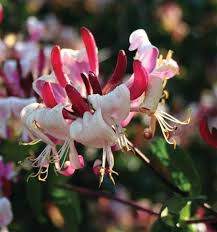
This is a fun new variety of Honeysuckle! Grows nice and compact and blooms profusely throughout summer. Flowers are two-tone - peachy/cream and pink. Heat, drought and humidity tolerant.
Specifying this plant? Save it to a project in the shop, or match a whole plant schedule with Plant List Matcher.
Plant facts
Sizes and prices
Retail prices; trade pricing for wholesale accounts. Availability updates hourly; stock last changed 2026-10-20.
Good to know
- Fragrant.
- Attracts pollinators.
- Suitable for Utah Lake secondary water systems.
Quick answers
How big does Peaches & Cream Honeysuckle Vine get?
About 8' tall at maturity.
How much sun does Peaches & Cream Honeysuckle Vine need?
Full Sun to Part Shade (3 to 6+ hours Sun).
How much water does Peaches & Cream Honeysuckle Vine need?
Low water use.
Will Peaches & Cream Honeysuckle Vine grow in Utah and the Intermountain West?
It is rated hardy to USDA zone 4, so it suits sites in zone 4 or warmer, which covers most of the region. The Salt Lake Valley floor is mostly zone 7; benches, mountain valleys and high plains in Utah, Idaho, Montana, Colorado and Wyoming are colder, often zones 3–6, so check the zone for your site.
Where can I buy Peaches & Cream Honeysuckle Vine in Utah?
Progressive Plants in Copperton, Utah has it in stock, from $24.99. Homeowners can order online for pickup at the farm or local delivery; landscape contractors can have it shipped across Utah, Idaho, Montana, Colorado, Wyoming and Nevada.
Can landscape contractors buy Peaches & Cream Honeysuckle Vine wholesale?
Yes. Landscape contractors and architects with a Progressive Plants wholesale account get trade pricing, bulk ordering and shipping across Utah, Idaho, Montana, Colorado, Wyoming and Nevada on our own trucks or by freight ($1,500 minimum outside our local delivery area). Apply at progressiveplants.com/wholesaleapp.html or call 801-565-7333.
Find similar plants
VinesFragrant PlantsPlants that Attract PollinatorsPlants for Secondary Water