
 In Stock
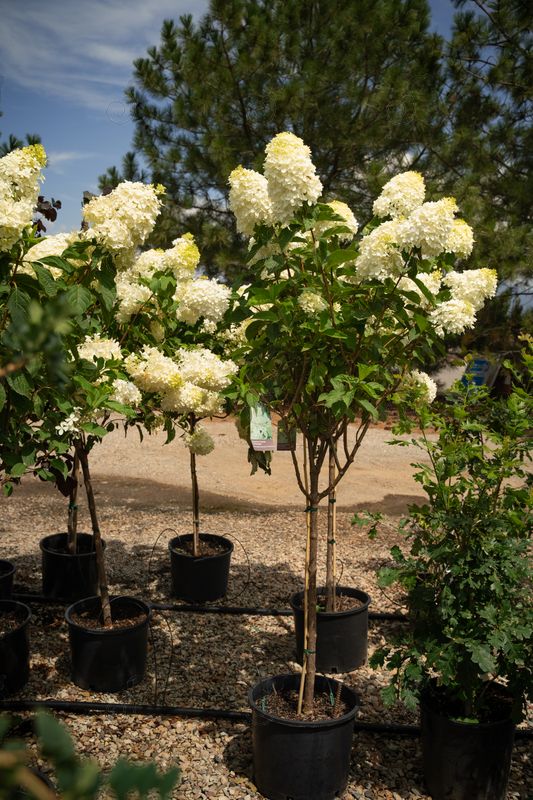
Phantom Panicle Hydrangea
Hydrangea paniculata 'Phantom' Tree Form
Panicle Hydrangea
In stock · from $193.99
Oversized cones of creamy white frothy flowers open in summer and shift slowly to deep pink as night time temperatures fall. Amazing cut flowers and perfect garden focal point.
Specifying this plant? Save it to a project in the shop, or match a whole plant schedule with Plant List Matcher.
Plant facts
Sizes and prices
Retail prices; trade pricing for wholesale accounts. Availability updates hourly; stock last changed 2026-10-26.
Good to know
- Attracts pollinators.
- Good for cut flowers.
- Suitable for Utah Lake secondary water systems.
Quick answers
How big does Phantom Panicle Hydrangea get?
About 7' tall and 6' wide at maturity.
How much sun does Phantom Panicle Hydrangea need?
Full Sun to Part Shade (3 to 6+ hours Sun).
How much water does Phantom Panicle Hydrangea need?
Moderate water use.
Will Phantom Panicle Hydrangea grow in Utah and the Intermountain West?
It is rated hardy to USDA zone 4, so it suits sites in zone 4 or warmer, which covers most of the region. The Salt Lake Valley floor is mostly zone 7; benches, mountain valleys and high plains in Utah, Idaho, Montana, Colorado and Wyoming are colder, often zones 3–6, so check the zone for your site.
Where can I buy Phantom Panicle Hydrangea in Utah?
Progressive Plants in Copperton, Utah has it in stock, from $193.99. Homeowners can order online for pickup at the farm or local delivery; landscape contractors can have it shipped across Utah, Idaho, Montana, Colorado, Wyoming and Nevada.
Can landscape contractors buy Phantom Panicle Hydrangea wholesale?
Yes. Landscape contractors and architects with a Progressive Plants wholesale account get trade pricing, bulk ordering and shipping across Utah, Idaho, Montana, Colorado, Wyoming and Nevada on our own trucks or by freight ($1,500 minimum outside our local delivery area). Apply at progressiveplants.com/wholesaleapp.html or call 801-565-7333.
Find similar plants
Flowering TreesPlants that Attract PollinatorsPlants for Secondary Water